Top 5 Data Engineering Trends to Watch in 2026
As we move deeper into 2026, data engineering is evolving faster than ever—fueled by AI breakthroughs, the hunger for instant insights, and the push for scalable, trustworthy foundations. Insights from the 2026 State of Data Engineering Survey (1,101 data professionals) and reports from Gartner, IBM, and Datafold show AI usage exploding while organizational challenges persist.
Here’s a quick snapshot of the five trends defining the year:
- Agentic and AI-Native Data Engineering — AI agents now autonomously build, optimize, and maintain pipelines, letting engineers focus on strategy.
- Real-Time and Event-Driven Architectures — Continuous streaming is replacing batch as the default for timely decisions.
- Multimodal Lakehouses and Open Architectures — Unified platforms seamlessly handle tables, images, text, video, and vectors using open standards.
- AI-Assisted Pipeline Development and Automation — Generative AI writes, tests, and deploys code from natural-language descriptions.
- Enhanced Data Observability and Autonomous Monitoring — Predictive, self-healing systems keep complex pipelines reliable without constant manual oversight.
These shifts are turning data platforms into intelligent, adaptive systems that power AI at enterprise scale.
Survey Snapshot: What 1,101 Data Pros Are Really Experiencing
(2026 State of Data Engineering Survey – February 2026)
- AI is table stakes: 82% use AI tools daily or more (54% multiple times a day). Only 3.7% find them unhelpful.
- Organizational lag: 64% still experimenting or limited to tactical tasks.
- Modeling crisis: 59% cite “pressure to move fast”; 51% lack clear ownership; just 11% say modeling is going well.
- Architectures: 44% primary in cloud warehouses, 27% in lakehouses, with hybrids and event-driven on the rise.
- Outlook: 42% expect team growth in 2026.
Explore the full interactive charts and filter by role, industry, or company size → 2026 State of Data Engineering Survey Explorer
Trend 1: Agentic and AI-Native Data Engineering
Data engineering in 2026 is becoming truly agentic. Autonomous AI agents now handle end-to-end tasks—writing pipeline code, provisioning infrastructure, debugging issues, and orchestrating workflows—while engineers move into strategic roles, designing systems that agents can reliably operate.
The numbers confirm it’s no longer optional: 82% of data professionals use AI daily, yet only ~10% of organizations have embedded it into most workflows (2026 State of Data Engineering Survey). Gartner lists AI agents as the #1 trend for 2026, and Datafold predicts an “agentic boom” as frontier models deliver production-grade reasoning. Teams that adopt early are already seeing 50% higher growth expectations.
The smartest next step is to start small and safe: pick one low-stakes pipeline and let an agent generate, test, and iterate on transformations. Monitor results closely, then scale with confidence. Leading examples include multi-agent frameworks like LangChain or AutoGen, plus native agentic features in platforms like Databricks that emphasize zero-copy integration and GPU-accelerated processing.
Related reading: Datafold: Data Engineering in 2026 – 12 Predictions
Trend 2: Real-Time and Event-Driven Architectures
Batch processing is quietly retiring. In its place, continuous event-driven pipelines are becoming the standard, moving data instantly so analytics, monitoring, and decisions happen in real time rather than overnight.
IBM notes that real-time processing is “increasingly crucial for high-value use cases,” especially as AI agents need fresh context. The survey shows event-driven architectures at just 6.8% today—creating massive opportunity. Finance, retail, IoT, and customer teams simply can’t wait any longer, and mature streaming tech has finally made it reliable and cost-effective.
Start by identifying one high-impact use case (live customer behavior or operational monitoring) and migrate it to a streaming architecture. Measure the drop in latency and business uplift—the ROI speaks for itself. Core technologies powering this shift include Apache Kafka or Amazon Kinesis for ingestion, combined with Apache Flink or Spark Streaming, all feeding directly into modern lakehouses for unified batch-plus-real-time processing.
Trend 3: Multimodal Lakehouses and Open Architectures
Lakehouses have grown up. Today’s platforms unify structured tables, unstructured files, images, video, and vector embeddings in one governed environment, all built on open table formats that eliminate silos and vendor lock-in.
The survey shows lakehouse adoption at 27% (higher in large enterprises and Latin America), with warehouses at 44% and hybrids filling the gap. AI workloads are the catalyst—models need diverse data types, zero-copy access, and seamless governance. Open standards like Iceberg are accelerating adoption because they deliver scalability, cost control, and AI readiness without complexity.
A practical move is to run a proof-of-concept migration on a portion of your current lake or warehouse, adding vector search or unstructured data handling along the way. The winners right now are Apache Iceberg (with strong Databricks and Snowflake support), Delta Lake, and Hudi—paired with multimodal extensions that make embeddings and rich media first-class citizens.
Related reading: Gartner Top Trends in Data & Analytics for 2026
Trend 4: AI-Assisted Pipeline Development and Automation
Engineers no longer write every line of ETL code by hand. Generative AI tools now translate natural-language descriptions into complete pipelines, complete with testing, documentation, and deployment—dramatically accelerating development while reducing errors.
Survey respondents ranked “writing code” as the #1 value from AI (~82% of selections). The volume of data and pace of AI projects simply outstripped manual methods. Reliable assistants have matured, handling repetitive work so engineers can focus on architecture, business logic, and innovation.
Begin by integrating an AI coding companion into your daily workflow for a single pipeline type—transformations are usually the easiest win. Review and version-control every output until trust is built, then expand. Popular implementations include GitHub Copilot-style assistants inside dbt, Airflow, and Prefect, plus automated governance features that keep everything compliant by design.
Related reading: Boomi: The Top 5 Data Engineering Trends for 2026
Trend 5: Enhanced Data Observability and Autonomous Monitoring
Observability has evolved from dashboards to intelligent systems. Modern platforms now predict issues, detect anomalies automatically, trigger self-healing actions, and maintain governance across increasingly complex, AI-powered pipelines.
Data quality remains a real pain: 34% of teams spend significant time on reliability, and 10.1% call it their biggest bottleneck. With real-time flows, multimodal data, and agentic workloads, traditional monitoring falls short. Regulations and AI trustworthiness are pushing teams toward proactive, automated oversight.
The easiest entry point is to layer observability onto your existing critical pipelines, establish baselines, and enable automated alerts plus simple remediation rules. Tools such as Monte Carlo, integrated lakehouse observability, and metadata-driven platforms are leading the way, turning monitoring into a self-managing layer that scales with your data ambitions.
How Dataverses Helps
Dataverses is built exactly for this moment. Our unified, AI-ready platform simplifies every one of these trends—giving teams agentic capabilities, real-time streaming, multimodal lakehouse power, automated pipeline development, and intelligent observability—all in one governed environment. You spend less time wrestling infrastructure and more time delivering the trustworthy data that powers your most ambitious AI initiatives.
Ready to lead in 2026?
Subscribe to our newsletter for monthly deep dives on emerging tools, real-world patterns, and practical guidance.
Tags
Keep up with us
Get the latest updates on data engineering and AI delivered to your inbox.
Contents in this story
Recommended for you
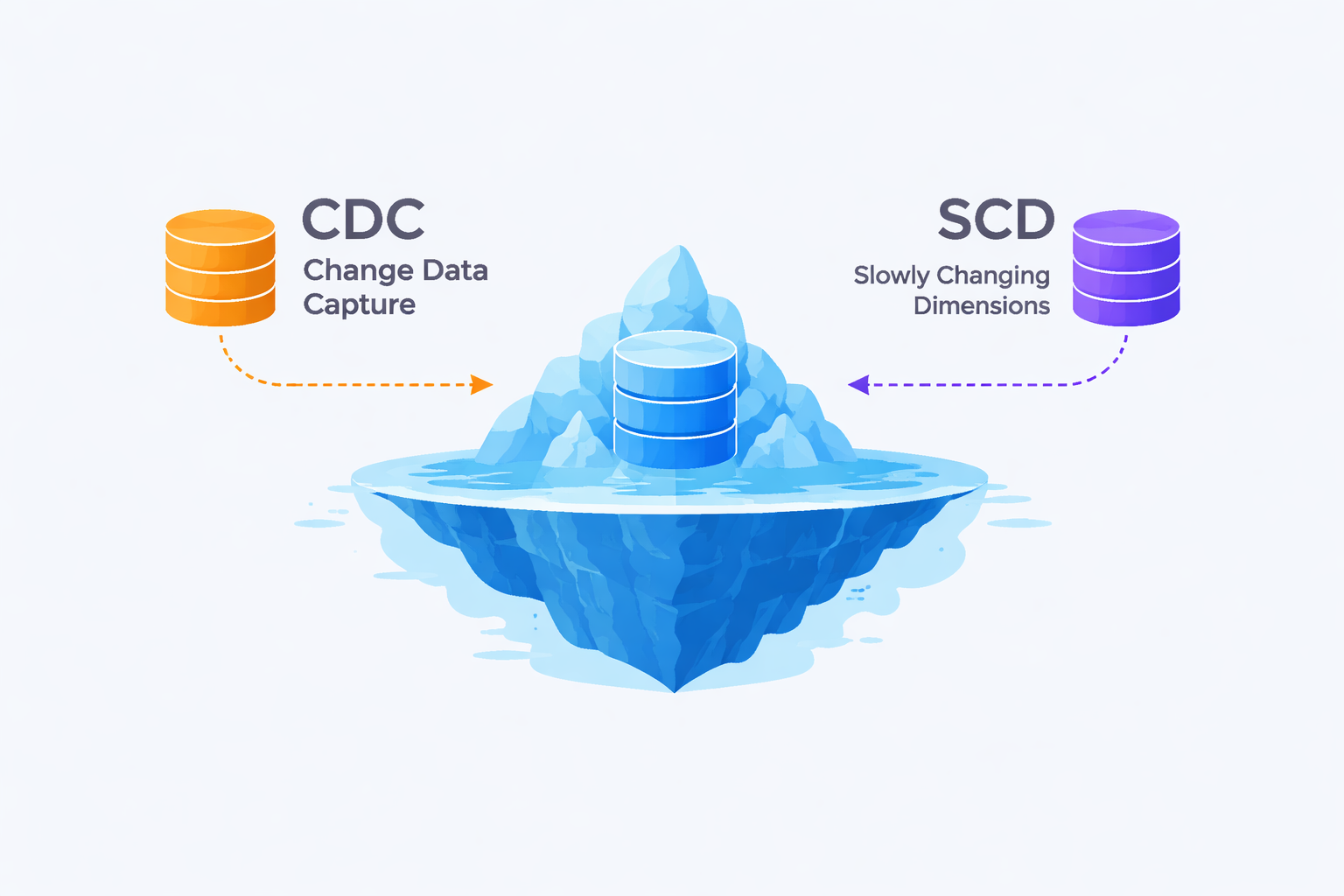
CDC and SCD on Apache Iceberg: Patterns, Tradeoffs, and Getting It Right
Mar 24, 2026 · 11 min read
Optimizing Apache Iceberg on S3: Avoiding Costly Infrastructure Pitfalls
Mar 24, 2026 · 8 min read
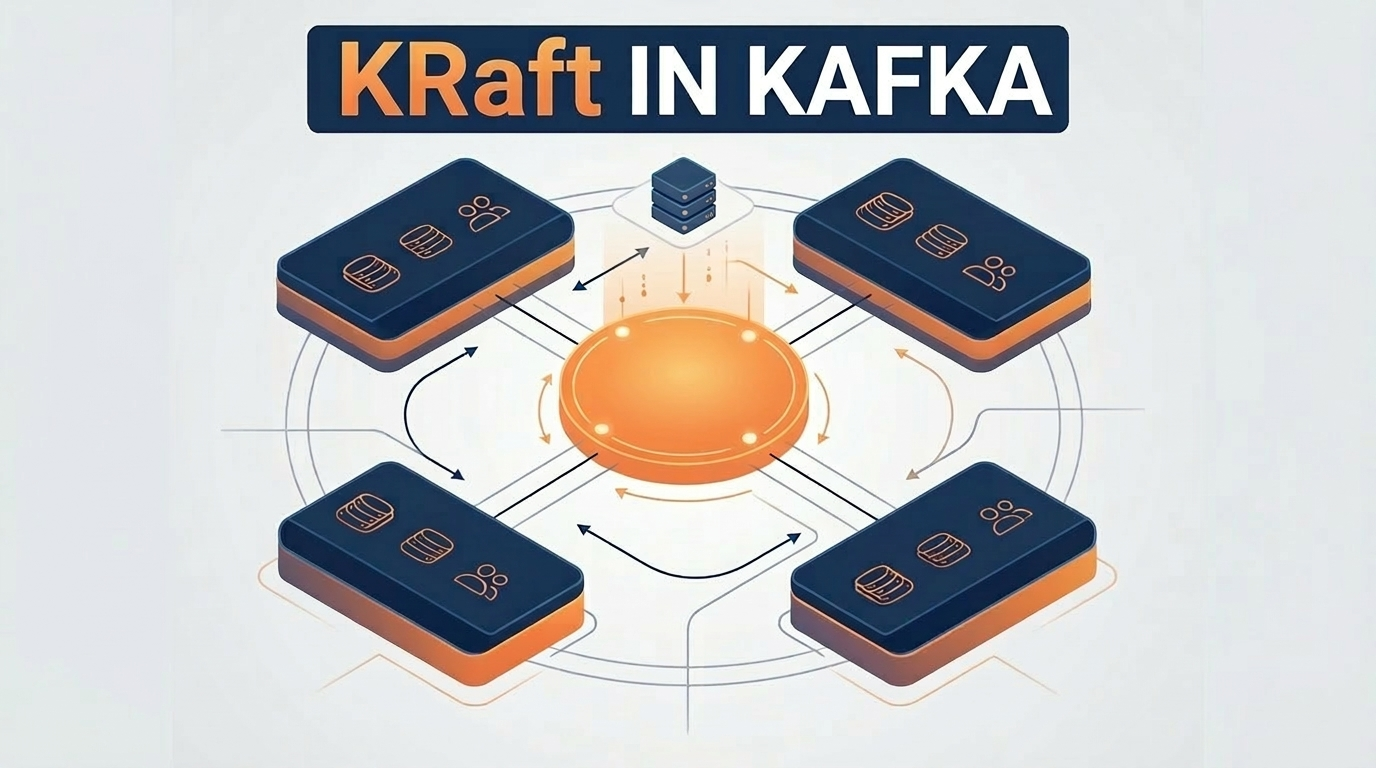
How to Set Up a Kafka Cluster with KRaft Architecture (Step-by-Step)
Mar 7, 2026 · 9 min read